
What makes innovation in life science labs possible? Breakthroughs are often attributed to bolt-of-lightning insights or lucky accidents. Serendipity does matter, but as Louis Pasteur famously noted, chance favors only the prepared mind. We can extend his idea further to say that chance also favors those who conduct research in a prepared lab.
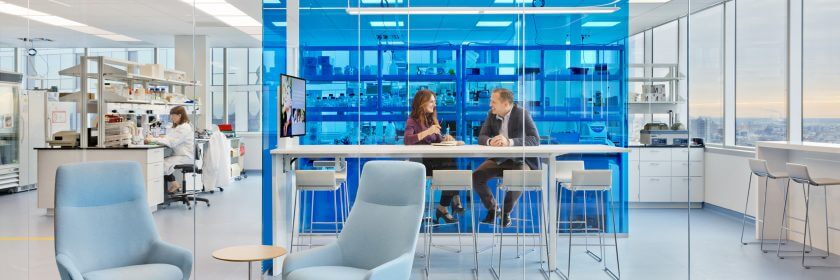
Behind every successful research program is a physical environment that supports the generation of ideas, meaningful connections with science and people, and research to be conducted efficiently and safely. When carefully planned, labs can be more than a place to do research—they allow innovation to flourish. Proximity of diverse research teams encourages cross-pollination. Academic institutions and incubator facilities know this well, intentionally designing spaces that foster collaboration rather than leaving it to chance.
So how does a lab design translate into scientific discovery? By operationalizing innovation. When architecture and engineering are thoughtfully integrated, you have a lab plan that allows innovative science to thrive. The key elements of effective lab design include benching, equipment, and people. Whether it’s a wet or dry lab, testing, research, or quality control lab, innovation thrives when space is intentionally planned to support scientific work.
This requires:
- Planning: Approach to stakeholder engagement
- Design: Flexible and future-ready design strategies
- Tools and processes: Support for long-term scientific growth
Planning for success: The CRB approach to stakeholder engagement
Designing an innovative lab is a complex project that requires client engagement throughout the process. We rely on a series of sequential tools to guide the process, including prework, interactive and visual tools to align goals, address key drivers, and successfully create a shared lab vision in as little as one day.
PreRead
Preparation means clients can share clear goals and key information with the designers. Instead of lengthy surveys, CRB spends one hour on focused questions to engage scientists and lab managers, uncover challenges, build early alignment, and ease them into the design process.
After we’ve reviewed the PreRead feedback, we’re ready to move to a face-to-face meeting.
Perfect lab vs perfect fit
Clients see we aren’t pushing a design to satisfy us. We aim for their perfect fit—whether we’re designing a QC lab, research facility, or innovation space—supported by CRB’s strong technical expertise and experience. Ultimately, it’s their fit, not ours.
Visioning session
A design kickoff meeting gives the lab users the chance to share their vision for the space they’ll be using. This begins with an exploratory imaging process in which stakeholders vote on their preferences between a series of as many as 50 paired images of lab spaces.
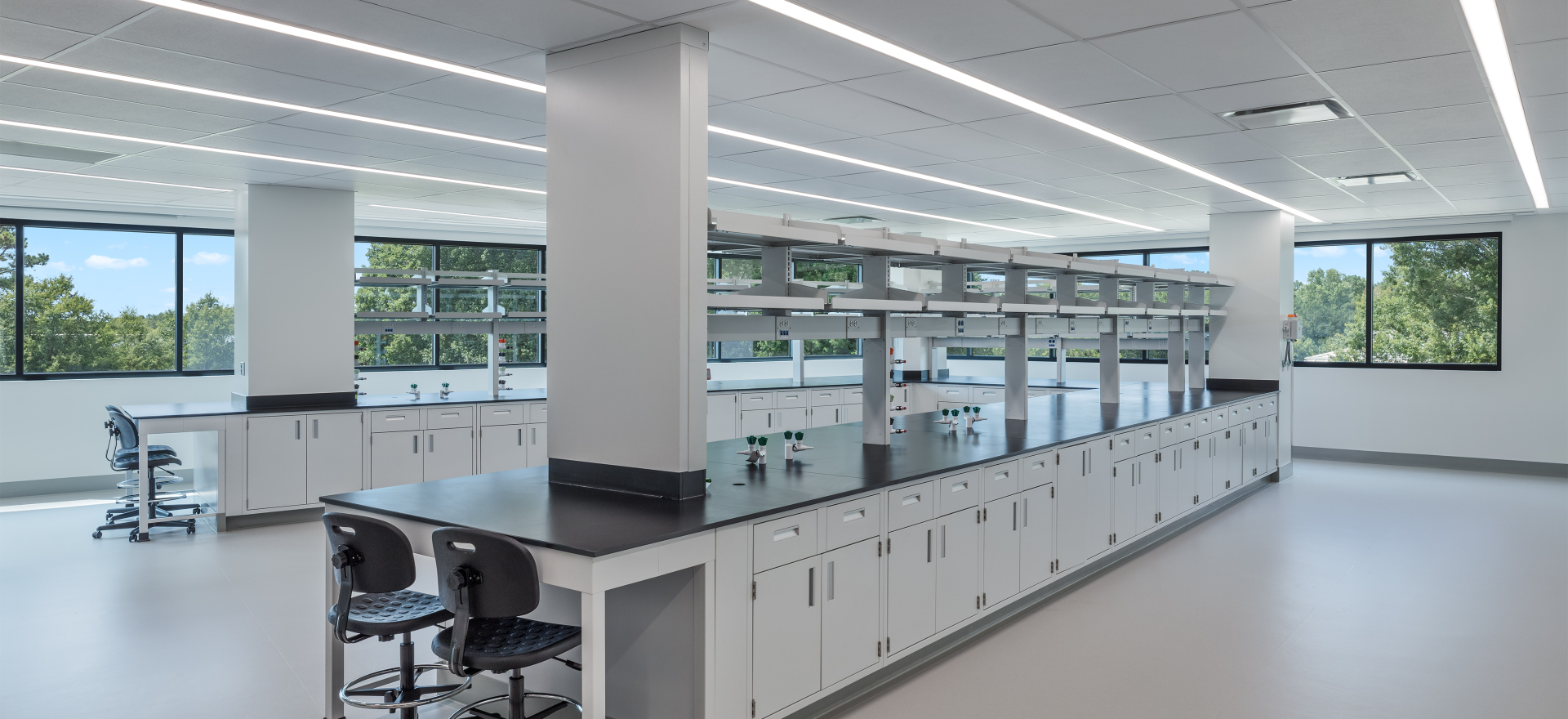
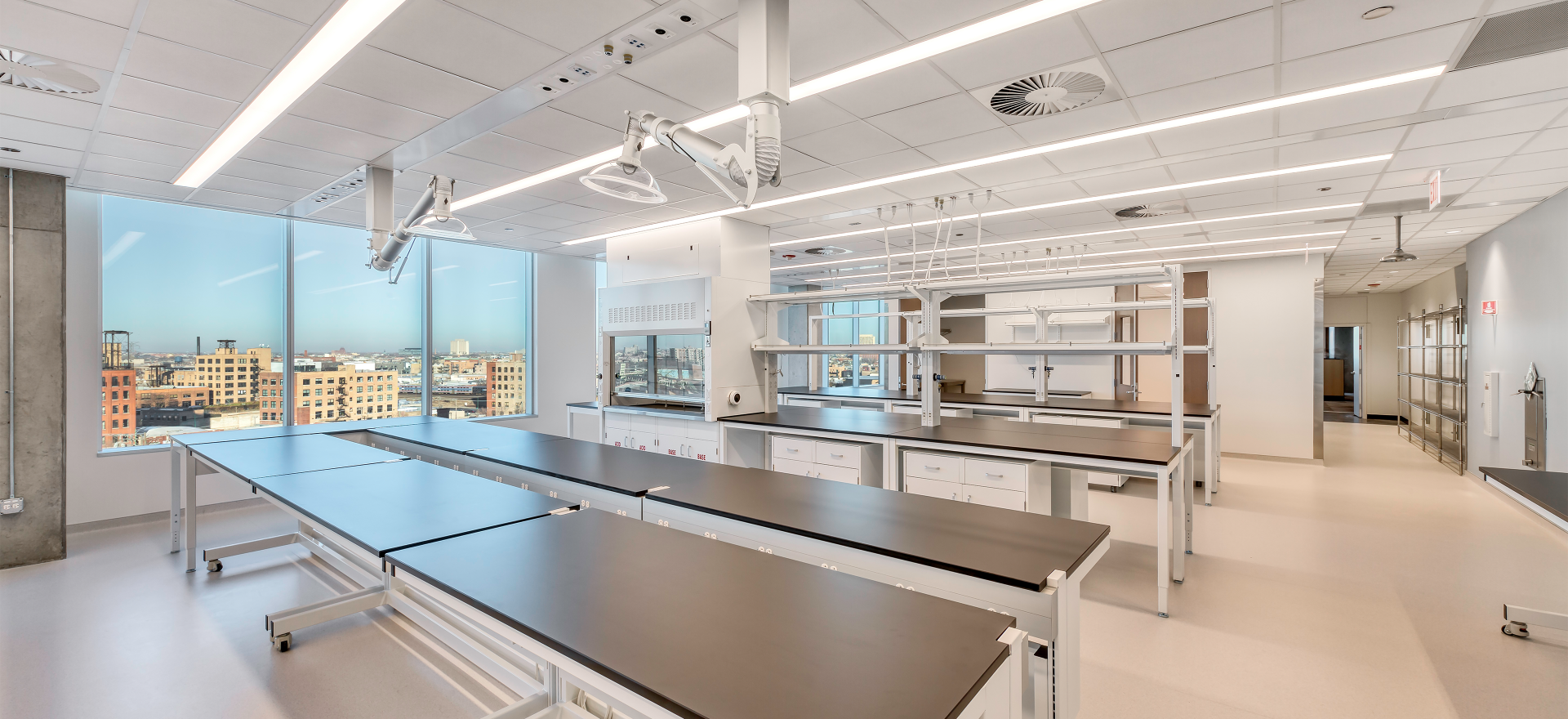
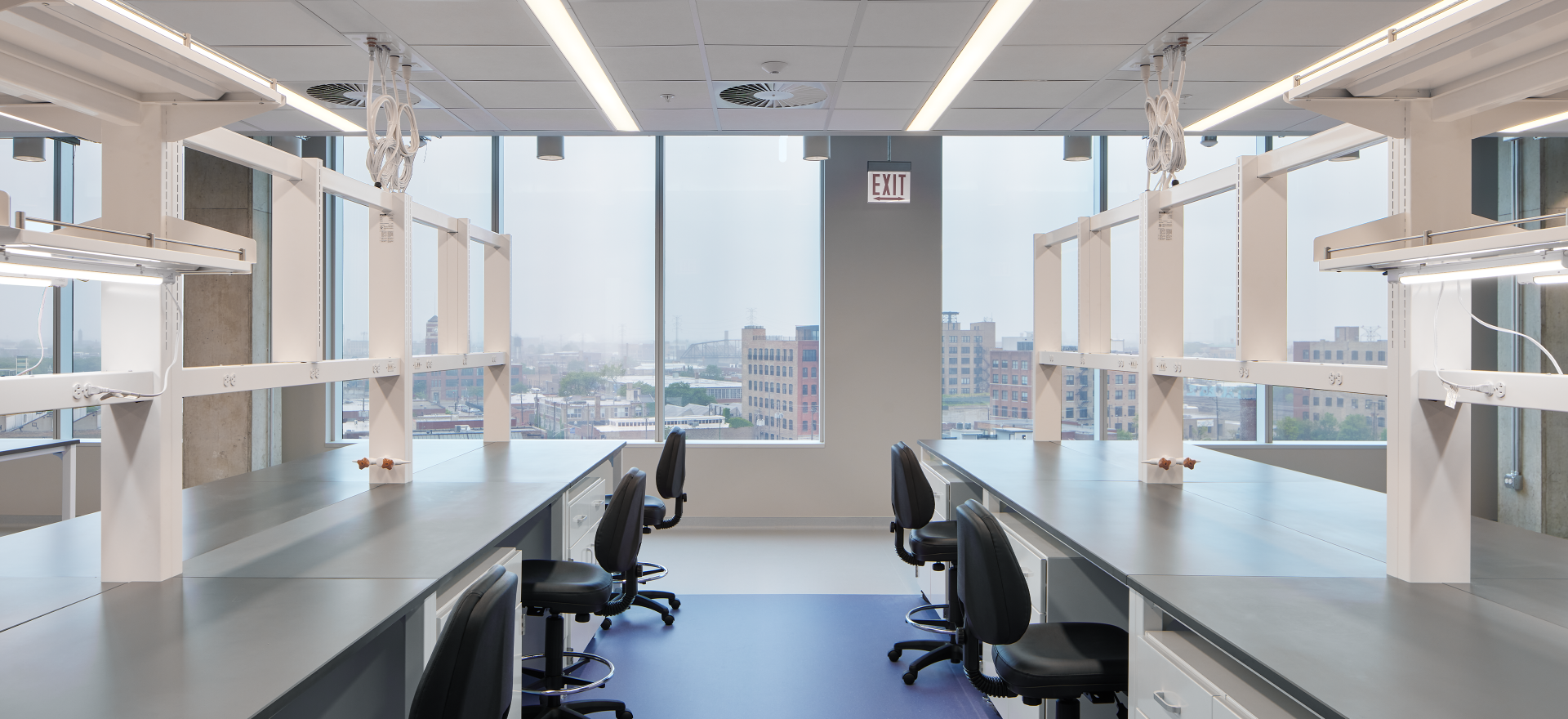
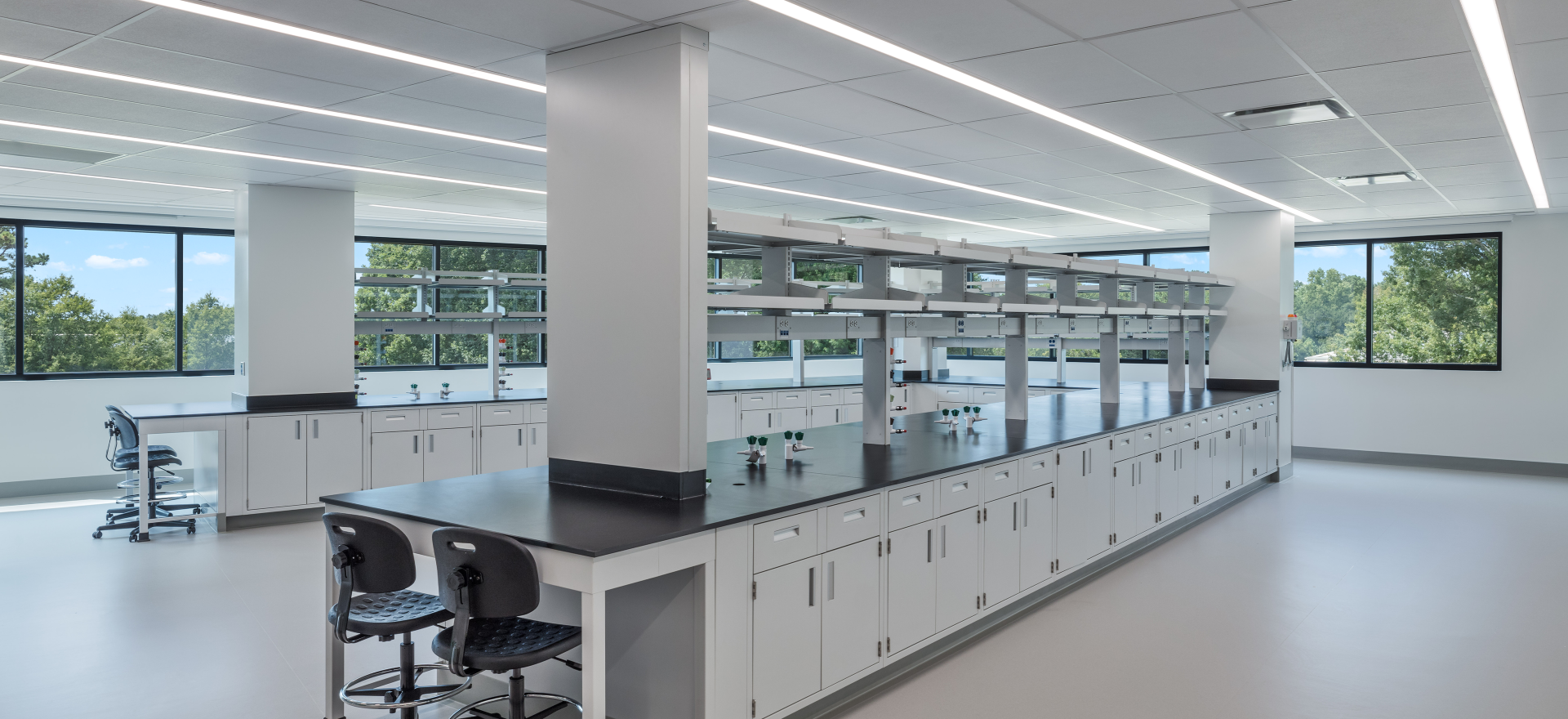
Real-time polling during the meeting clearly reveals their preferences and builds consensus about configuration, safety features, and human-centric design considerations, like light, common spaces, and views.
It works for renos, too
For lab renovations, we include images of the existing facility. These usually score low with lab managers and researchers but help ultimate decision makers see user preferences and say, “OK, now I see why we need to renovate this lab.”
A snapshot of technical specs
All the technical and structural details of a lab are collected in a one-page program analysis room data sheet (RDS). An RDS includes surface finishes, mechanical, electrical, and plumbing (MEP) utilities, benches, fume hoods and biosafety cabinets, structural considerations (e.g., need for vibration control), and daylighting requirements. It’s a graphical checkbox in a digestible format that’s easy to understand and highlights client needs.
Building trust together
These planning sessions develop trust, encouraging lab users to share their opinions and perspectives. They work because we’re open to the process and want to hear their input, supported by effective communication and a depth of experience.
3 pillars of flexible and future-ready design
Effective lab environments start with thoughtful planning that balances scientific excellence, evolving technologies, and human needs. Good lab design (GLD) is a strategy for creating flexible, future-ready research spaces that support collaboration, innovation, and automation.

1. Modular benching and infrastructure
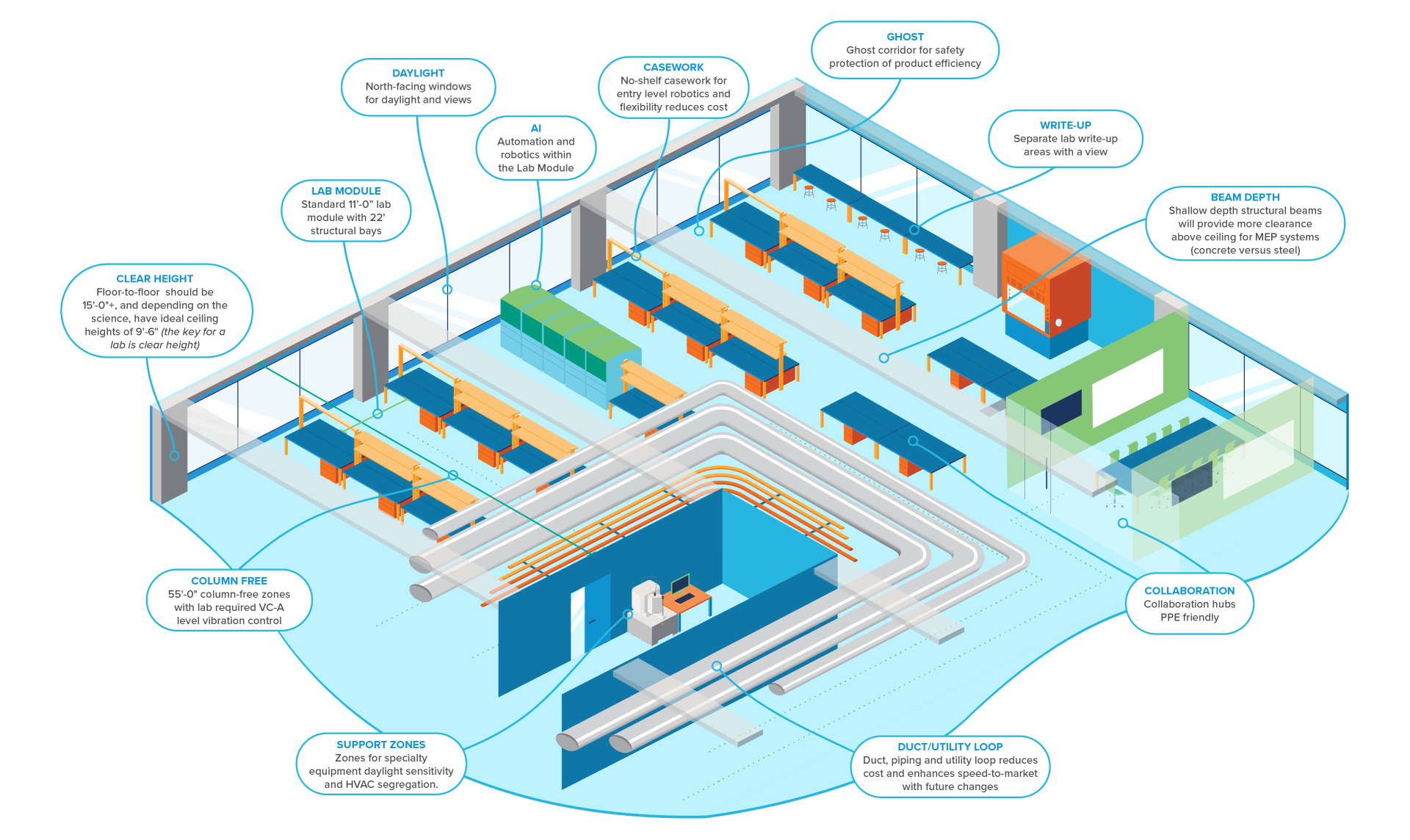
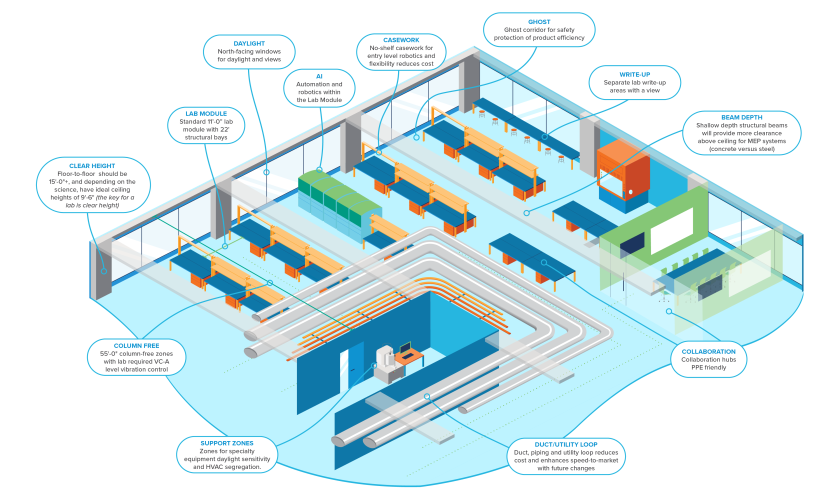
GLD implements lab module rigor into all aspects of innovative design. It considers layout options, including multidirectional and hexagonal configurations that maximize usable workspace. Modular lab design creates adaptable spaces, using movable tables, utility connections in the ceiling, and plug-and-play quick connects.
What is a lab module?
A simple description of a lab module that is often used—i.e., a grid with a certain dimension—doesn’t include key elements of good design. Instead, we define the lab module to include everything done within a lab. Allowing the module to expand beyond two dimensions means we can include the mechanical, electrical, and plumbing strategy for the building. It factors in the integration of current and future automation and robotics.
The lab module is the basis for structural elements, finishes, floor-to-floor heights, ceiling design, relationship to exterior windows, vibration sensitivity, and the location of elevators, corridors, and loading docks. It guides how people and materials access and move through the space, improving workflow and visibility, and supports proper hazardous material handling, simplifies maintenance and waste removal, and contributes to a comfortable and collaborative workplace.

2. Equipment integration
Rapid scientific change demands laboratory designs that are flexible to adapt to new technologies, especially those coming with Industry 4.0. The way current and future equipment is coordinated within lab workflows, how it’s powered, and where it’s stored lay the foundation for innovative scientific discovery.
Digitalization and automation will continue to evolve and impact the equipment layout of a future-ready lab. Spatial planning is necessary for all the equipment that supports the lab, including benchtop equipment, refrigerators and freezers, and utilities.
Industry 4.0
As we found from canvassing experts for our Horizons: 2022 Life Sciences report, most biopharma companies are seriously considering the incorporation of Industry 4.0 technologies. Embracing digitalization, AI, machine learning, and robotics in lab environments will depend on a good lab module that can adapt to innovations, whether it’s within a year or 10 years from now.
The PreRead allows clients to share their anticipated or real robotics and automation needs today and in the future. There are three levels of robotic automation that have to be factored into lab design:
- Entry-level: A desktop instrument capable of a few tasks, such as a Liquid Chromatography/Mass Spectrometry (LC/MS) sample prep platform that automates liquid handling and seamless injection directly into the LC/MS.
- Mid-level: Larger-scale equipment that integrates multiple devices to complete diverse workflows, such as all the steps of polymerase chain reaction (PCR) from sample loading through diagnostics. Because it is fixed in place, it affects the lab module and has to fit within the existing footprint, as well as accommodate those needs in the future.
- Pro-level: This future state will see labs with complete robotic automation. Preparing for this means considering the electrical needs since automated equipment tends to require more electrical power. This is an opportunity for a high level of sustainability and safety, as a true closed process will not require high air changes or personal protective equipment (PPE).
Custom-integrated solutions
Unless there is an existing off-the-shelf product, CRB will work with vendors that create unique mid-level robotics by integrating multiple automation technologies within one solution. These integrators are key consultants to the design team, supporting the integration of robotics and automation to create something new to solve an issue for a specific project.
For example, a vivarium client was hoping for a solution to relieve staff from having to push vivarium racks from room to room and floor to floor, which was ergonomically challenging and time-consuming. In response to the PreRead questions, the client asked if they could use a robot to move the racks instead.
CRB partnered with a trusted vendor, which makes autonomous mobile robots, and, in less than a week, we had a proposal to create a custom solution for the client. In fact, the modified robots can even call the elevator and move between floors autonomously.

3. Human-centric design
Labs must support both research and researchers. Modern lab design that emphasizes comfort, wellness, and efficient workflows promotes employee well-being while laying the foundation for scientific discovery. Good airflow, daylight, and outdoor views add to the positive environment and increase productivity. Thoughtful collaboration areas encourage idea sharing, while ergonomic furniture, task lighting, and well-positioned equipment enhance safety, comfort, and performance. Good architectural design can enhance how workers feel in these spaces, the way you might be more comfortable at your local coffee shop than in a cookie-cutter chain.
Tools and processes to operationalize scientific growth
Once we’ve worked with our clients to learn what they need to succeed, we apply the tools and processes of GLD to design their ideal lab.
Benchmarking and statistics
When envisioning a new lab, or converting an existing space into a functional lab, the architect and engineering team collect benchmarking data to inform lab design. This starts by assessing general ratios between the floor space devoted to lab and office, bench and floor equipment, and open and closed labs. The data refer to structural considerations, like module shape and size, floor-to-ceiling height, and vibration criteria. Mechanical, electrical, and plumbing data include such things as plug loads, ventilation and airflow that inform the HVAC system, and drainage.
An example checklist of these laboratory facility requirements is filled out using our extensive industry experience and from a client’s internal data. Referring to these best practices improves quality, reduces costs, and enhances efficiency of an innovative lab design.
A good example is a calculation of the number of drainage fixture units (DFUs) that will be needed. Along with our plumbing and piping engineer, our designers can estimate from the types of science being conducted how many sinks will be needed to handle the volume of drainage needed to handle draining, cooling, and waste processes.
Strategic facility planning
Good lab design is predicated on strategic facility planning (SFP), which helps companies create a roadmap for future growth.
An SFP identifies requirements needed to meet short-term and long-term organizational goals. For instance, in manufacturing, how much product do we need to meet over the next couple of years or how many people do we need to hire over the next couple of years. This information is then integrated into a master plan that outlines how much space and infrastructure is needed to accomplish these goals in 5, 10, or 20 years.
SFP is a core consultancy at CRB. To learn more or engage CRB for strategic facility planning, click here.
Innovation in practice
Designing a lab space from the ground up allows us to control what that building needs to be a true lab building. However, it’s rare for a greenfield project because of budget constraints, schedules, and operational needs. Two-thirds of lab design projects are renovations of existing labs or retrofits. We’ve seen office buildings, cafeterias, hotels, and all kinds of warehouse spaces converted into functional labs. CRB provided lab planning and engineering design services for a LEED Gold Certified office-to-lab conversion for Portal Innovations in Chicago.
The following projects highlight how existing buildings can be successfully reimagined to support modern laboratory operations.
Case Study: BioLabs coworking lab facility
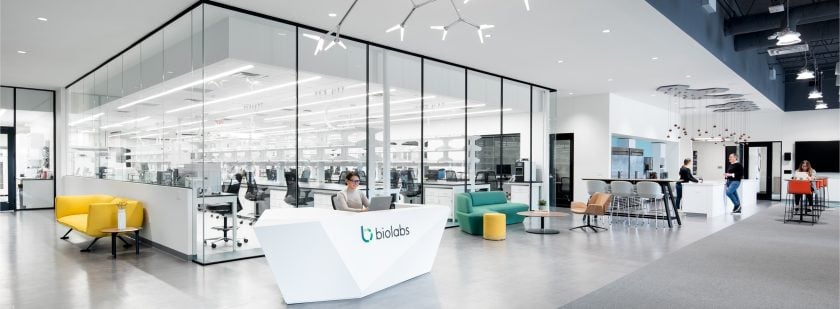
CRB designed and constructed a 37,000 square-foot facility for BioLabs in a large redevelopment site in Dallas. It includes flexible lab space, which is essential for high‑velocity biotech startups. This renovation of a warehouse doesn’t just provide space—it embeds innovation into its architecture, workflows, and shared services.
Integration into an existing mixed-use office campus
Pegasus Park is a redevelopment of a large site that houses biotech, social impact, and corporate ventures. Our redesign integrates beautifully into this ecosystem of co-working spaces, social impact hubs, meeting areas, and outdoor spaces. Innovation is encouraged through wise use of design elements.
Modularity
A range of shared labs and 6 private labs lowers the barrier to entry by letting companies grow from a single bench to private labs as needed.
- 90 open benches
- Access to modern scientific equipment, available on demand
- Tissue culture and microbiology suites to support life sciences research
Open, inviting spaces
The redesign encourages spontaneous interaction among scientists, investors, and entrepreneurs, while increasing cross‑disciplinary knowledge transfer.
Case Study: Modular design for a biotech teaching lab
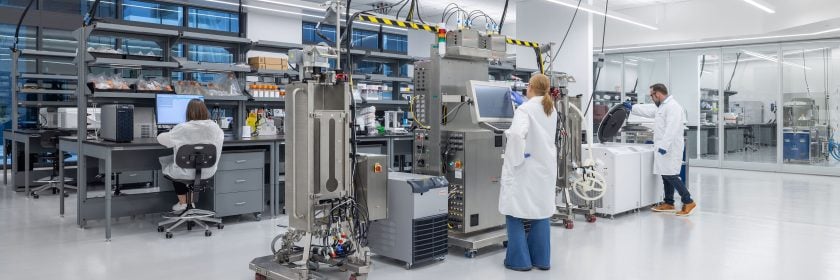
The Oklahoma City Innovation District (OKCID) is a burgeoning research and biomanufacturing hub in the heart of Oklahoma City. But industry needed a workforce training site to slow the loss of talent from the city.
CRB partnered with OKCID to design the Biomanufacturing Workforce Training Center (BioTC), which provides training programs in complete manufacturing workflows.
Equipment Information:
- 8,000 sq. ft. GMP-compliant facility
- Modular features, such as moveable glass walls, mobile casework, ceiling-mounted utility drops, and reconfigurable upstream and downstream labs, allow the training space to adapt to changing requirements, as well as mimic industrial biomanufacturing processes
- Benches and workstations can be rotated to maximize use of space and flexibility
It includes a specialized BSL-2 lab, providing:
- Gowning areas
- Upstream lab for cell culture and GMP training
- Downstream lab, equipped for chromatography, viral inactivation, filtration, and formulation
- QC and analytics, including environmental monitoring. Includes automated pipetting.
- Advanced development and process development labs to learn about scale-up, buffer and media prep, and process optimization
- Support spaces for storage, collaboration, and waste handling
Case Study: Talis Biomedical
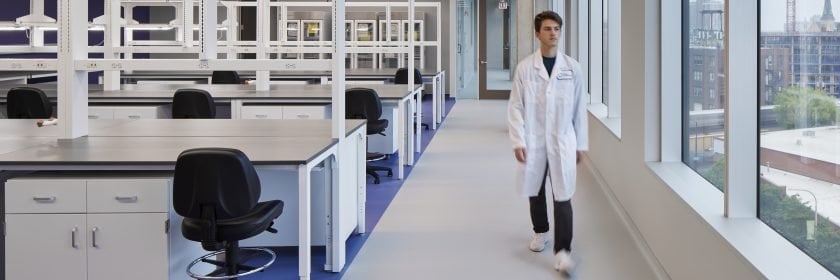
CRB designed a 22,000-square-foot molecular diagnostic testing laboratory for Talis Biomedical on the 7th floor of a triangular office tower in Chicago. The project includes office, lab, and chemical storage spaces tailored for specialized diagnostics.
The triangular layout was not ideal for lab space, but CRB was able to strategically place labs to avoid columns and layout conflicts, thus increasing efficiency and safety.
Good lab design incorporated flexible casework systems, including cleanroom‑approved components, enabling the lab to adapt to new workflows, assays, and diagnostic technologies as test menus evolve. Segregated rooms, advanced HVAC systems, and a low-humidity room with custom dehumidification support sensitive processes.
Procurement of a custom equipment system
Early coordination with a custom automation shop helped ensure the equipment system was properly designed and fabricated. This allowed an efficient installation and kept the project on schedule.
Creating spaces that accelerate innovation
Intentional lab planning and design transforms a research space into a catalyst for discovery. By aligning stakeholder insights, flexible design, and future-ready infrastructure, a lab becomes a place where scientists, equipment, and experimentation work seamlessly together.
Using strategy to guide planning—from modular layouts to worker-friendly spaces—labs support collaboration and efficiency to drive innovation. Ready to create a lab designed for discovery? Connect with our experts to explore strategies for flexible, future-ready research environments.