
Life sciences manufacturing outlook: Key trends shaping investment and growth
The life sciences industry has always operated in a dynamic environment, but today’s organizations are navigating a unique combination of evolving regulations, shifting investment priorities, workforce shortages and changing global supply chains. While specific market forces may come and go, the need to build resilient, adaptable manufacturing strategies remains constant.
Horizons snapshot
Drawing on insights from 400 global life sciences R&D and manufacturing professionals surveyed for Horizons: Life Sciences 2025 report, this article explores the trends shaping manufacturing and capital investment decisions—and what they mean for organizations planning the next generation of life sciences facilities.
58% report no change in manufacturing investment despite market uncertainty.
29% say capital expenditure plans have slowed.
33% report difficulty recruiting and retaining manufacturing staff.
Asia leads expected growth for both manufacturing and R&D over the next five years.
Key Takeaways
- Life sciences organizations continue investing despite economic and regulatory uncertainty.
- Companies are prioritizing manufacturing flexibility over reacting to short-term market events.
- Global growth opportunities remain strong across Asia, Europe and North America.
- Regulatory evolution and workforce shortages are influencing long-term facility planning.
- Organizations that build adaptable manufacturing strategies today will be better positioned for future growth.
How is market uncertainty affecting life sciences manufacturing?
Short answer: Market uncertainty has encouraged companies to evaluate investments more carefully—but it hasn’t stopped growth.
The life sciences industry continues to invest in research, development and manufacturing despite an evolving economic and regulatory landscape. Rather than dramatically changing course, most organizations are taking a measured approach to investment decisions while maintaining a long-term focus on innovation and operational resilience.
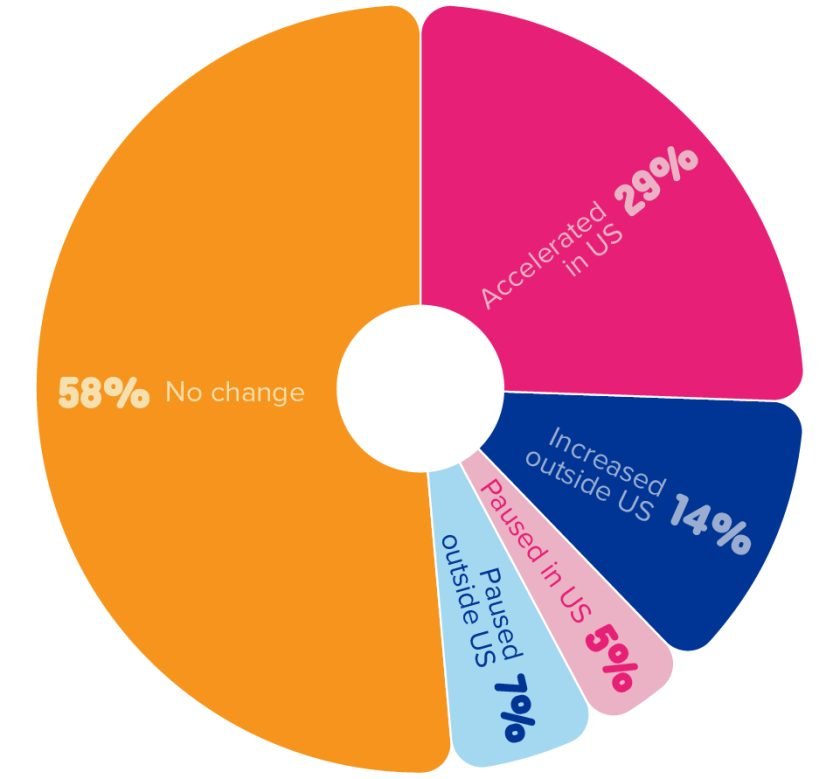
Most companies are maintaining manufacturing investment despite market uncertainty
While some organizations are increasing manufacturing investment, most respondents report little change in overall investment strategy, reflecting a measured approach to long-term growth.
According to CRB’s Horizons: Life Sciences 2025 survey, 58% of respondents reported no change in manufacturing investment, demonstrating that many organizations remain committed to long-term growth despite continued uncertainty. While some companies have accelerated investment—particularly in domestic manufacturing—most are evaluating opportunities based on a combination of business strategy, product demand, supply chain resilience and future regulatory expectations.
Today’s uncertainty extends beyond any single issue. Organizations are balancing evolving regulations, geopolitical developments, supply chain resilience, financing conditions and changing patient demand. Because life sciences facilities are designed to operate for decades, companies are increasingly focused on making investments that remain valuable regardless of changing market conditions.
Instead of asking, “How do we respond to today’s headlines?” many organizations are asking, “How do we build manufacturing networks that remain competitive over the next ten years?”
Why are companies taking a more cautious approach to capital investment?
Short answer: Companies remain optimistic about long-term growth but are slowing individual capital projects while evaluating changing market conditions.
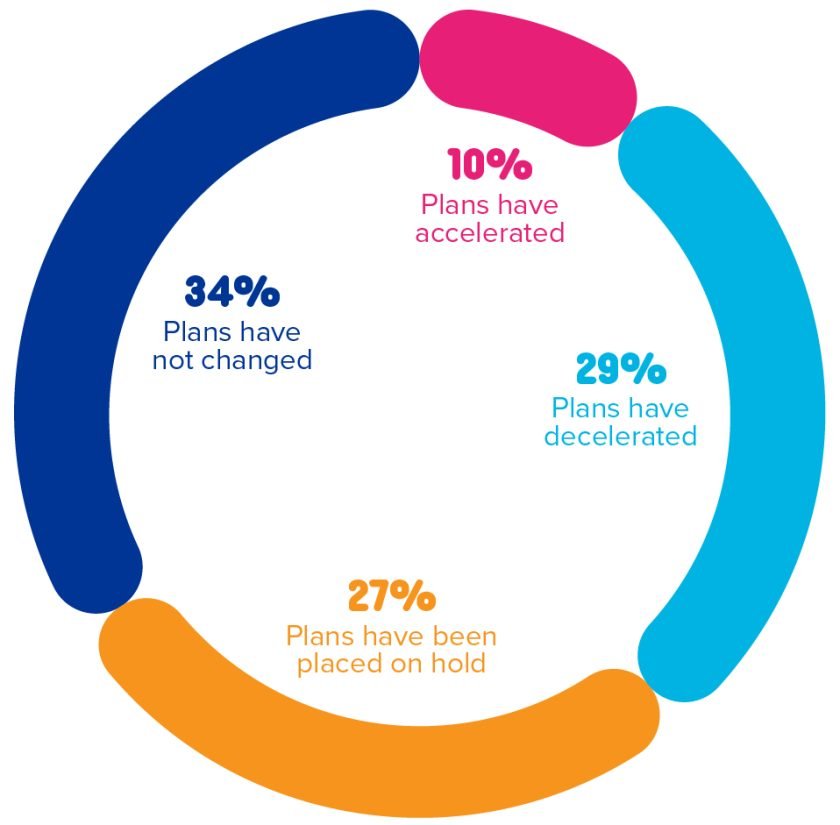
Market uncertainty is slowing site-level capital projects
While corporate growth strategies remain optimistic, many individual facilities are delaying or slowing capital investments until there is greater market clarity.
Public announcements often emphasize expansion and investment, but the reality at many manufacturing sites tells a more nuanced story.
Survey respondents indicated that many capital projects are moving more cautiously as organizations evaluate economic conditions, regulatory developments and evolving business priorities. According to the survey:
- 34% report capital plans have remained unchanged.
- 29% say plans have decelerated.
- 27% have placed projects on hold.
- Only 10% report accelerating capital investments.
This doesn’t necessarily indicate declining confidence. Instead, organizations are carefully prioritizing investments that offer the greatest long-term flexibility and return.
Companies are increasingly asking:
- Can this facility support multiple products?
- Will it accommodate future process technologies?
- Can capacity expand without significant renovation?
- How will evolving regulations affect operations?
These questions are driving a shift from building facilities for today’s needs toward designing facilities that can evolve alongside changing products, technologies and regulatory expectations.
For engineering and manufacturing leaders, flexibility has become just as important as speed.
Where is life sciences manufacturing expected to grow?
Short answer: Growth opportunities remain strong globally, with Asia leading expectations while North America and Europe continue to attract significant investment.
Although organizations are carefully evaluating new investments, confidence in the long-term future of life sciences manufacturing remains high.
Survey respondents expect meaningful growth across all major life sciences regions over the next five years, with each geography offering unique strengths.
North America continues to attract manufacturing investment as organizations strengthen domestic production capabilities and build more resilient supply chains.
Asia leads expectations for both manufacturing and R&D growth, reflecting continued investment in innovation ecosystems, expanding pharmaceutical development and growing production capacity.
Europe remains a critical center for research and development, supported by strong academic institutions, established pharmaceutical infrastructure and continued innovation.
Rather than concentrating manufacturing within a single region, many organizations are expanding diversified global manufacturing networks that improve flexibility while reducing operational risk.
This global approach allows companies to respond more effectively to evolving demand, regional regulations and future product portfolios.
For organizations planning new facilities, the question is no longer simply where to build—it’s how to create manufacturing strategies that can support global operations for years to come.
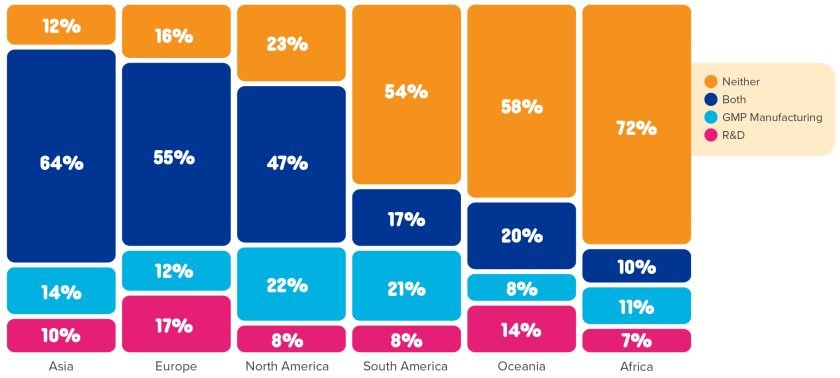
Global growth opportunities remain strong across key life sciences markets
Survey respondents continue to expect significant manufacturing and R&D growth across Asia, Europe and North America over the next five years.
How are regulatory changes influencing manufacturing strategy?
Short answer: Regulatory expectations continue to evolve, requiring organizations to build greater flexibility into their facilities, quality systems and manufacturing strategies.
The regulatory environment has always shaped life sciences manufacturing, but many organizations anticipate greater complexity in the years ahead. Changes to agency staffing, funding priorities and review processes are creating uncertainty around approval timelines and regulatory engagement.
Respondents to the Horizons: Life Sciences 2025 survey expect regulatory changes to have increasing impacts across multiple areas of product development, from research funding to new drug applications and ongoing interactions with regulatory agencies.
Rather than waiting for requirements to stabilize, many organizations are taking proactive steps to improve long-term readiness by:
- Designing facilities that can accommodate evolving regulatory expectations.
- Building quality into manufacturing processes earlier.
- Increasing operational flexibility.
- Investing in digital systems that improve traceability and compliance.
As advanced therapies continue to grow, adaptable facility design will become even more important for organizations seeking to support multiple products and changing regulatory expectations over time.
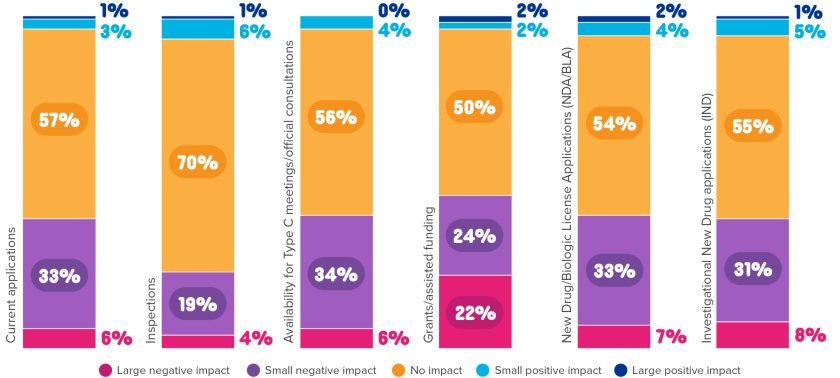
Companies expect regulatory complexity to increase
Survey respondents anticipate growing impacts from policy and organizational changes on funding, regulatory engagement and drug development activities.
Why is talent becoming a competitive advantage?
Short answer: Recruiting and retaining experienced manufacturing and technical professionals remains one of the industry’s greatest long-term challenges.
Facilities, equipment and technology continue to evolve, but people remain one of the industry’s most valuable assets.
According to the Horizons survey, 33% of organizations report difficulty recruiting and retaining manufacturing personnel, with similar challenges emerging across research, quality and technical disciplines.
As manufacturing becomes increasingly specialized, organizations are competing for expertise in areas such as:
- Process development
- Manufacturing science
- Quality systems
- Chemistry, Manufacturing and Controls (CMC)
- Validation
- Regulatory affairs
- Advanced therapies
At the same time, experienced professionals are expected to become even more valuable as companies navigate increasingly complex manufacturing environments.
Organizations are responding by investing in workforce development, knowledge transfer and partnerships that supplement internal expertise.
For facility owners, workforce planning should be considered alongside facility planning. Manufacturing strategies are only as successful as the teams responsible for executing them.
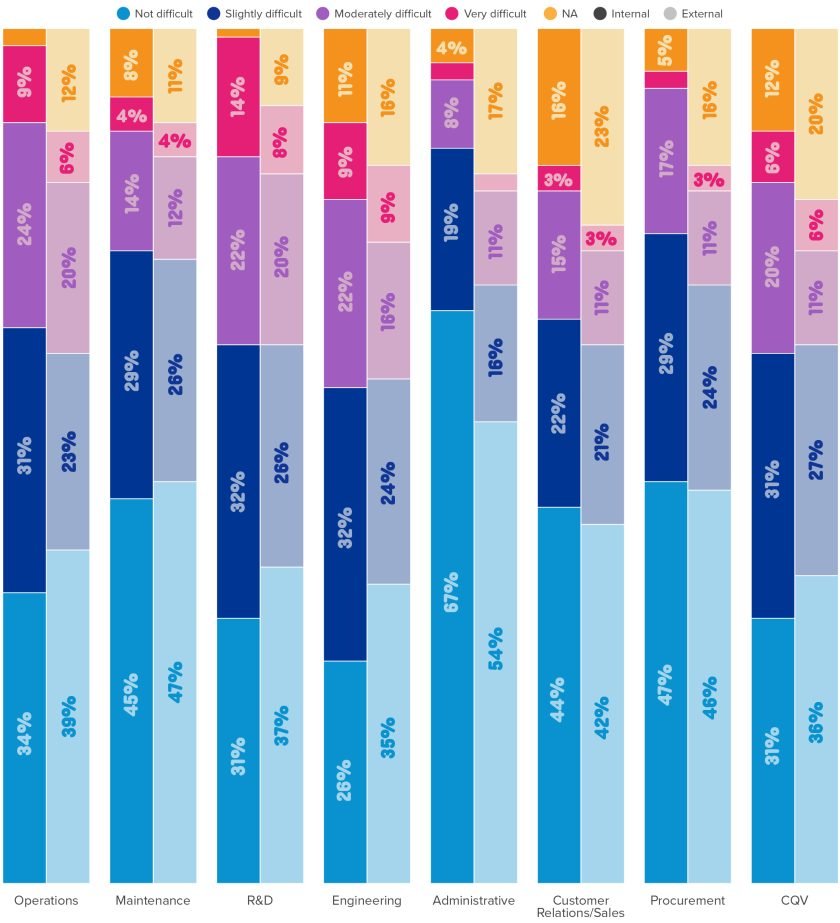
Technical talent remains one of the industry’s biggest challenges
Manufacturing, quality and technical roles continue to be among the most difficult positions for life sciences organizations to recruit and retain.
What should life sciences companies focus on next?
Short answer: Build manufacturing strategies that remain adaptable as technologies, regulations and business priorities evolve.
Market conditions will continue to change. Product pipelines will shift. Regulations will evolve. New technologies will emerge.
The organizations that succeed won’t necessarily be those that react fastest—they’ll be those that build flexibility into every stage of planning.
Based on the trends identified in the Horizons report, organizations should prioritize investments that support long-term resilience, including:
- Flexible manufacturing facilities
- Modular and scalable infrastructure
- Resilient global supply chains
- Digital manufacturing technologies
- Future-ready contamination control and quality systems
- Cross-functional workforce development
- Facilities capable of supporting multiple modalities
Rather than designing around today’s challenges, organizations should prepare for tomorrow’s opportunities.
The facilities entering design today are likely to operate well into the 2030s. Decisions made now will influence manufacturing performance, regulatory readiness and operational efficiency for years to come.
Building for the future of life sciences
External market conditions will continue to evolve, whether driven by regulatory policy, economic conditions, technological innovation or changing patient needs. While those forces influence short-term decision-making, successful life sciences organizations continue planning with a much longer horizon.
Manufacturing facilities are designed to operate for decades—not news cycles.
Organizations that prioritize flexibility, operational resilience and future-ready facility design today will be better positioned to respond to whatever comes next.
Download the full report for additional survey findings, industry trends and expert insights on product strategy, manufacturing innovation and the future of life sciences.
Frequently Asked Questions
Yes. Despite economic and regulatory uncertainty, organizations continue to invest in manufacturing capacity, with particularly strong growth expectations across Asia, Europe and North America.
Many organizations are taking a more measured approach to investment while evaluating broader market conditions, financing, regulations and long-term business priorities.
Investment decisions are increasingly influenced by manufacturing flexibility, supply chain resilience, workforce availability, evolving regulations and long-term product strategies—not a single market event.
Product portfolios, regulatory expectations and manufacturing technologies continue to evolve. Flexible facilities allow organizations to adapt without significant capital reinvestment.
Many organizations continue to experience difficulty recruiting experienced professionals in manufacturing, quality, regulatory affairs and technical operations.
Organizations can improve resilience by designing adaptable facilities, investing in scalable technologies, strengthening supply chains and building multidisciplinary technical expertise.



Risk assessment strategies for life sciences manufacturing
Effective risk assessments provide manufacturers with a systematic, scientifically driven framework for making the right decisions at the right time to support successful outcomes. Regulators expect manufacturers to include risk assessments in their Contamination Control Strategy (CCS) and Quality Risk Management (QRM) programs. Sometimes viewed as limiters of innovation, risk assessments are, in fact, the
Read More