Return to top


In the life science and food and beverage industries, a manufacturing plant shutdown is a high-pressure operation. Plant shutdown teams must manage complex system interdependencies and multiple codependent subcontractors in a regulated environment without overlooking a single critical detail. The key is to establish a comprehensive facility shutdown plan that will eliminate contamination and compliance risks while maximizing the safety, speed, and ultimate success of the shutdown project.
Plant shutdown teams manage significant risk. During partial shutdowns, where some production lines remain active, construction work must proceed without compromising the manufacturing environment or disrupting throughput. Even a complete plant shutdown is a complex process in which every hour of delay increases revenue losses. The risks are even higher for facilities manufacturing critical products, whether life-saving medications or essential food and beverages that consumers rely on.
To navigate this razor’s edge of tight deadlines, complex logistics, and high stakes, plant shutdown teams need a well-structured shutdown plan from day one. Drawing from decades of experience supporting plant shutdowns in regulated industries, we’ve compiled a list of important considerations when developing that plan. Use this list to help your team execute a streamlined, on-time, and on-budget shutdown process that meets all safety, quality, and business requirements.

1. Ensure all stakeholders have bought into the Construction Execution Plan.
Pre-project alignment among all stakeholders is critical. It’s not uncommon for a carefully developed Construction Execution Plan (CEP) to fall apart when a maintenance manager, IT supervisor, lab manager, or other unconsulted stakeholder comes forward with a major concern at the eleventh hour. Such late-stage pushback can derail project timelines and lead to expensive design rework, regulatory compliance issues, or disruptions to ongoing production in the case of a partial shutdown project.
That’s why early and comprehensive stakeholder engagement matters. Plant shutdown teams should begin by identifying all impacted areas and their representatives, creating a stakeholder map that includes everyone from production teams through facility and maintenance groups, quality assurance personnel, digital infrastructure specialists, subcontractors, and more.
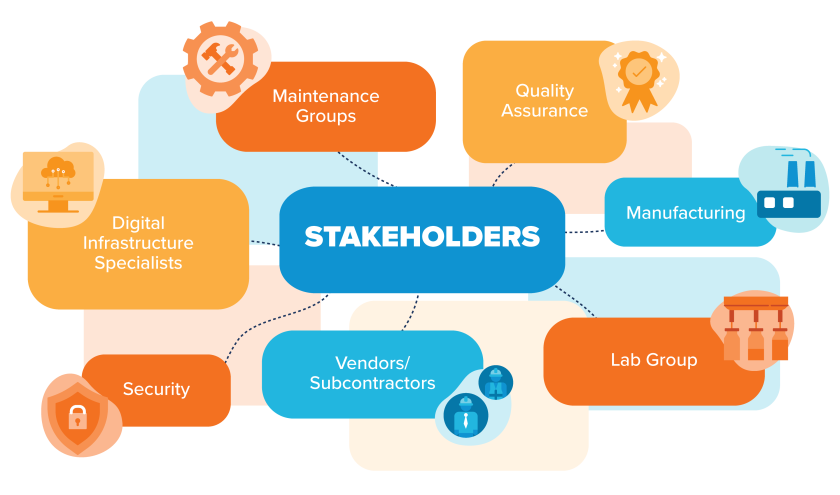

Key takeaway: Avoid last-minute roadblocks by ensuring that all stakeholders have bought into the CEP before proceeding with the plant shutdown process.

2. Verify all electrical and utility configurations in person before beginning the shutdown process.
Life science and food and beverage manufacturers know that updates to critical utilities must be tracked and recorded as part of a strict change control protocol. This is especially true in GMP spaces, where the systems responsible for generating Water for Injection, maintaining environmental control, and performing other regulated functions must be laid out in detailed, up-to-date Piping and Instrumentation Diagrams (P&IDs).
Non-GMP utilities do not necessarily receive the same level of rigor. For example, it’s not unusual for plant shutdown teams to discover a different distribution panel than what they see in facility drawings, or to find that additional power loads have been added to a circuit over time but never recorded.
Surprises like these can expose workers and business outcomes to serious risk. For example:
- A failure of life-safety systems: If a fire alarm system malfunctions because of an unexpectedly de-energized circuit, a real fire-related emergency could go undetected.
- A failure of access control systems: If an undocumented change leads a worker to mistakenly cut a door control cable, workers could be trapped inside a room.
- A disruption to ongoing manufacturing processes: In a partial shutdown, electrical work could cause unintended damage to a monitoring system, impacting real-time process controls in an active production area. Workers may also shut down a panel without realizing that it controls equipment that must remain online, impacting throughput.
To avoid these risks, plant shutdown teams should conduct in-person walk-downs of the job site to trace electrical feeds, verify power sources, and cross-check system dependencies. Completing this due diligence early in the shutdown process will ensure that plant shutdown teams make decisions based on a complete picture of the facility’s power, utilities, and emergency systems.
Key takeaway: Conduct a physical walk-down to confirm power sources, verify emergency alert systems, and cross-check system configurations against relevant diagrams before initiating your shutdown process.

3. Make sure every worker understands the shutdown LOTO plan.
Every plant shutdown team knows that a robust Lockout/Tagout (LOTO) plan is the foundation of a safe job site during the shutdown process. The LOTO plan ensures that electrical and mechanical systems undergoing maintenance remain inactive or de-energized by leveraging a system of physical locks and warning tags.
Establishing and sharing a LOTO plan at project kick-off isn’t enough, though. In the busy and deadline-driven environment of a plant shutdown, individual subcontractors may unknowingly bypass a lockout they perceive as unimportant or assume a system is safe to work on when it isn’t, putting lives in danger and potentially delaying project completion.
For a LOTO system to effectively protect against these risks, plant shutdown teams should clearly and consistently communicate the plan to every worker, every day. That means establishing mandatory LOTO training for all personnel, posting visual LOTO boards throughout the job site to build awareness and universal understanding, and reinforcing LOTO requirements at every shift change.
Key takeaway: Support your project’s LOTO plan with mandatory training, up-to-date visualizations posted throughout the job site, and consistent communication and reinforcement (especially at shift change).

4. Define and schedule all required training well in advance.
With all attention focused on the shutdown process and the race to get a facility back into production, plant shutdown teams may underestimate the scope and timing of training requirements—some of which must begin as early as contract or purchase order signing. These requirements often go beyond basic contractor safety briefings to include complex, facility-specific training unique to life science or food and beverage manufacturing. It’s not unusual for such training to require days, not hours, to fulfill.
For example, extensive GMP-specific training may be required before any worker can enter a drug manufacturing facility’s regulated environment. Even baseline training in overall safety risks and emergency response protocols can be a source of delays without adequate planning. Some facilities offer in-person training on a fixed schedule, such as once a week. Given the number of subcontractors typically involved in a complex shutdown project, ensuring that everyone has attended these limited training sessions before their scheduled arrival is challenging. A subcontractor who misses their opportunity may not be able to work until the next training session, or may require an escort while on-site—a compromise that can become a logistical nightmare when on-the-ground personnel is already limited.
While planning for adequate training, plant shutdown teams should also consider legal and environmental health and safety (EHS) requirements. For example, workers may need valid permits, certifications, and vaccinations to enter the job site, which can take time to acquire. In some environments, such as a life science manufacturing plant, advanced drug testing and background checks may also be necessary—another requirement that demands adequate up-front planning to avoid delays.
Key Takeaway: Consider the time needed to fulfill in-person and online training requirements and schedule those training requirements early.

5. Lay the groundwork for clear, reliable communication throughout the shutdown process.
A plant shutdown is a dynamic, fast-moving project. Although your team may have started on the same page, that page can turn quickly, leaving some project members behind and increasing the risk of safety issues and delays.
Open and reliable channels of communication throughout the delivery cycle are the answer. To do that:
- Ensure Wi-Fi, cellular data, and radio signals are functional across the job site. Will your facility’s existing network reach the job trailers and other external work areas involved in a shutdown site? Overlooking this important detail can cause major issues when real-time remote communication becomes impossible. Also, the concrete and rebar inside the walls of many commercial facilities can impede cell phone and radio signals. Testing these signals and determining their reliability before proceeding with a plant shutdown can help avoid future communication headaches.
- Provide adequate team-based meeting spaces. A typical shutdown site is a dynamic place where multiple project teams work in parallel. Ensuring that each team has access to a designated war room or Big Room in which to convene and exchange critical information will help provide order and drive progress amid that busy scene. A visual daily work plan, prominently displayed and easily updated between shifts, will ensure that every team member has a clear and immediate picture of what’s been accomplished, what must be done next, and who is responsible.
- Consider the language needs of all team members. Many shutdown projects rely on the skills of a diverse and multilingual workforce. Incorporating visual cues alongside language-based communication will help avoid misunderstandings and ensure work proceeds safely and smoothly. That may mean leveraging color-coded task boards, pictogram-driven signage, and universal safety symbols. Team leaders may also use advanced translation apps to facilitate back-and-forth communication and help every worker feel understood, valued, and safe on the job site.
Key takeaway: Ensure reliable communication throughout the shutdown process by testing WiFi and other signals across the job site, providing designated team-based meeting spaces, and accommodating the language needs of all subcontractors and other stakeholders.

6. Optimize site logistics for both workers and materials.
While a shutdown is underway, plant owners no longer have a whole manufacturing plant—they have a construction site. People working on a construction site may have different needs from those in a manufacturing plant. Meanwhile, construction materials require new flow paths. This is particularly important during partial shutdowns, when a facility’s warehouse may be supporting ongoing production while also receiving equipment skids related to the shutdown project.
To manage this complexity and ensure that all people and materials get where they need to go safely and reliably, plant shutdown teams must temporarily define, enforce, and maintain unique site logistics throughout the delivery lifecycle.
- All workers need access to gender-appropriate restrooms. Workplaces across industries are pushing for greater inclusion, accessibility, and safety for all workers, and the same is true on construction sites. As a baseline, that means providing clean, gender-appropriate restrooms for all workers.
- Provide a place where people can refuel. Ensure access to comfortable break areas away from the activity of the job site. Consider the needs of those using these spaces: Are they air-conditioned or heated, depending on the climate? Is there a fridge and a microwave available? Are there enough garbage and recycling bins, with a plan for regular disposal? Is there safe and convenient access to a designated smoking area? Is there a place to store or dispose of protective and hygienic gear such as shoe covers or face masks, as well as access to replacement gear available when re-entering the job site?
- Improve safety by helping people navigate the job site quickly and confidently. During a partial shutdown, construction teams may be working alongside operational production lines. Under these conditions it’s vitally important that all workers understand which areas of the facility are available to them and which are off-limits. Plant shutdown teams should support these briefings with appropriate door interlocks and signage. Design pedestrian walkways that are physically separated from the routes traveled by delivery trucks, forklifts, or other vehicular traffic. Even simply alerting security guards about upcoming deliveries or expected visitors can go a long way toward establishing a safe, well-run job site where people easily get where they need to go.
- Define temporary delivery re-routes. Large equipment deliveries are typical of a shutdown project. Anticipating these deliveries and defining their route in advance is the key to avoiding interference with ongoing work. Contamination considerations are also important: sensitive equipment, such as filtration systems for life science applications or mixing tanks for a food and beverage operation, should be received and stored away from high-dust or high-traffic construction zones, for example.
- Plan for staging and laydown areas. Some equipment, such as new HVAC units or process tanks, requires a temporary laydown area. It takes careful upfront planning to designate these areas, which must meet specific criteria—large enough to accommodate the equipment, close to the installation point, away from exits or high-traffic areas, and so on.
Key takeaway: Think through site logistics from a “people” and a “materials” perspective, with consideration given to flow paths, navigability, and access to appropriate rest areas.

7. Define vendor documentation requirements well before initiating the CQV process.
The Commissioning, Qualification and Validation (CQV) process ensures that the modified post-shutdown facility complies with requirements and performs as designed. All plant shutdown teams know the importance of this step, particularly when restoring a life science manufacturing plant to regulated GMP service.
Plant shutdown teams typically rely on vendor submittals to develop their CQV protocols. These submittals can range from formal documents (such as Certificates of Conformance, material traceability records, or other compliance-related documentation) to operating manuals and installation guides.
If even one critical vendor document is missing or incomplete, the CQV process stalls. Consider a new or modified clean steam system, for example. The CQV team needs detailed calibration records from the vendor to validate the system’s sterilization cycle. Without those records, they cannot prove the system’s performance, and production cannot resume.
Chasing down records like these after installation is time-consuming and occasionally unsuccessful (vendors often struggle to provide necessary documentation after shipping equipment). The resulting delays can compound the challenge of existing supply chain turbulence and long lead times. Custom-built electrical switchgear, for example, can take a year or more to deliver; in these circumstances, manufacturers cannot afford unexpected CQV delays.
To avoid this problem, plant shutdown teams should define submittal requirements during the equipment procurement phase, ensuring that vendors understand expectations from day one. This investment in early planning will help to streamline the CQV process and keep shutdown projects on track.
Key takeaway: Define your vendor documentation requirements during the procurement stage to avoid a delayed CQV process.

8. Pair internal facility expertise with a specialized shutdown team.
No one understands the inner workings of a specific manufacturing plant better than the people who operate and maintain it every day. That level of facility expertise is critical during a shutdown. Knowing how to leverage it effectively is the key to executing a safe and efficient shutdown process that finishes on time and within budget. Follow these suggestions to ensure that your project team is positioned for success:
- Conduct an honest appraisal of internal bandwidth. Managing a shutdown using only internal resources can be challenging. Internal teams are already juggling full-time responsibilities; overloading them with a complex, high-stakes shutdown project may lead to inadvertent oversights, particularly given that some project managers may have little experience with shutdown projects that happen once a year (or less frequently). Even one missed detail—like failing to plan for temporary electrical tie-ins—can snowball into a significant schedule overrun. That’s why it’s important to assess team bandwidth before committing internal resources to a shutdown project. By identifying potential issues related to the availability or experience of your internal teams, you can proactively develop a plan to fill those gaps and ensure success.
- Consider a hybrid internal/external team. Pairing internal facility resources with external shutdown professionals is often the pathway to improved logistics, coordination, and risk mitigation. Internal teams bring site-specific insights to the table; external professionals bring the lessons they’ve learned and the specialized knowledge they’ve accumulated from executing dozens of shutdown projects every year. When these internal and external teams collaborate, they can ensure that every critical system is accounted for—leading to a safer, smoother, and more efficient shutdown process.
- Establish a centralized authority to oversee subcontractor coordination. Some plant shutdown teams assume that hiring and managing subcontractors directly will enable better control and a streamlined shutdown process. In reality, though, this decentralized model can generate more complexity and lead to a reactive “firefighting” culture, inhibiting consistent forward progress.
- A fully integrated and centralized contracting model is the solution. Under this model, a construction management (CM) team assumes responsibility for hiring, scheduling, and coordinating all subcontractors. This approach gives the CM team the contractual leverage they need to dynamically coordinate activities between trades, establish cohesive and efficient delivery sequences, and hold all subcontractors accountable to their deadlines. The result is a project with fewer avoidable hold-ups, simpler site logistics, and greater on-the-ground efficiency.
Key takeaway: Pair your team’s internal, site-specific plant expertise with the experience of a specialized shutdown team, and pave the way for smoother execution by appointing a construction manager to hire, schedule, and oversee all trade partners.
Conclusion
A successful plant shutdown requires site-specific expertise and a detailed work plan, but that’s not all. To succeed, shutdown teams must consider a complex and interconnected risk matrix with implications for workers, consumers, and business success.
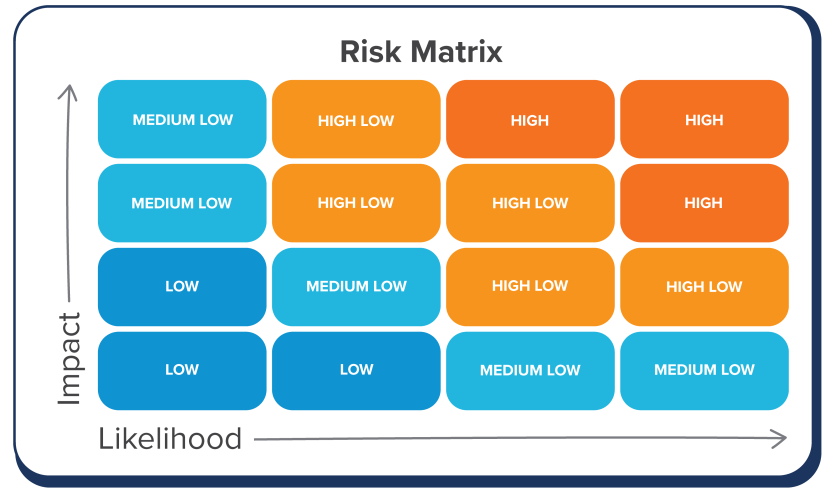
The right expertise, powered by lengthy experience with real-world shutdown challenges and proven strategies, can make all the difference.
When planning your next plant shutdown process, reach out to our team of shutdown specialists for tailored, expert-driven advice.