

Drawing on input from nearly 400 industry experts, the report explores how consumer product manufacturers plan for successful project startup. Data in the report highlights proven tactics and today’s key challenges—from defining project scope and sourcing resources to developing SOPs and achieving production goals.
Read More
Every capital project has two major deliverables: the physical facility and the turnover package that owners need to accept and operate that facility. These deliverables should move toward the finish line together.
Too often, though, delivery teams overlook turnover until the project approaches startup. At that point, they’re already behind. The result is an eleventh-hour scramble to resolve issues such as:

- Chasing down documents
- Communication scattered across multiple channels
- Vendor records in inconsistent formats
- Incomplete asset data
- Commissioning and qualification teams actively searching for evidence
Even if project teams manage to assemble most of the required documentation, they may still find themselves unable to answer the most important question: Is this system ready for acceptance and operation? This uncertainty can lead to unexpected delays and regulatory risks just as owners are facing tremendous pressure to start commercial production.
The alternative is to define the path to owner acceptance on day one, then integrate it with construction, commissioning and qualification activities. That’s how true readiness happens: through a controlled and coordinated turnover process spanning the full project lifecycle, not just its final stages.
Why traditional turnover fails
Traditional turnover rests on a flawed assumption: if each discipline completes its work, the turnover package will come together naturally. In reality, it’s rarely that simple.
Each discipline can do its own work very well, but without clearly defined turnover requirements, teams must interpret acceptance criteria for themselves. This leads to inconsistent or incomplete evidence, disagreements about what to include, and even fundamentally different ideas of what a “complete package” should look like. Teams who’ve experienced this fragmented turnover approach will recognize many of its common challenges:
- System boundaries that shift over the course of the project without consistent communication
- Documents that lack necessary metadata
- Known exceptions that aren’t consistently connected to acceptance
The result: as turnover approaches, teams may have a large volume of drawings, manuals and certificates, but that information lacks the structure and context that make it usable to downstream teams. That’s not an effective turnover package; it’s a recipe for delays, rework and transferred risk.
The consequences of a failed turnover
An ineffective turnover strategy pushes work later in the project, when delivery teams and owners are racing to bring the facility online. The consequences of this deferral show up most painfully in three related areas: project cost, schedule performance and regulatory readiness.
Expensive rework
The financial consequences of poor information management can extend far beyond closeout. In its Capital Facilities Information Handover Guide, the National Institute of Standards and Technology (NIST) estimated that inadequate interoperability in the U.S. capital facilities industry generated $15.8 billion in annual losses back in 2002. Owners and operators carried the largest share of those costs, much of it driven by the time spent finding, verifying and converting facility information after project delivery.
Of course, technology has advanced considerably since the NIST published that report, but its lesson remains true: when project handoffs don’t go well, costs can escalate rapidly.
Schedule pressure
Owners invest millions in operational readiness, yet most struggle to meet their schedule commitments. This was apparent in CRB’s 2025 Horizons: Operational Readiness survey of nearly 400 manufacturers from around the world. The largest share of survey respondents said they allocated 2% to 3% of total project budget to operational readiness, yet only about one third reported hitting their commercial target dates more than 75% of the time. On a $400 million project, 2% to 3% represents $8 to $12 million invested in readiness efforts without eliminating significant schedule risk.
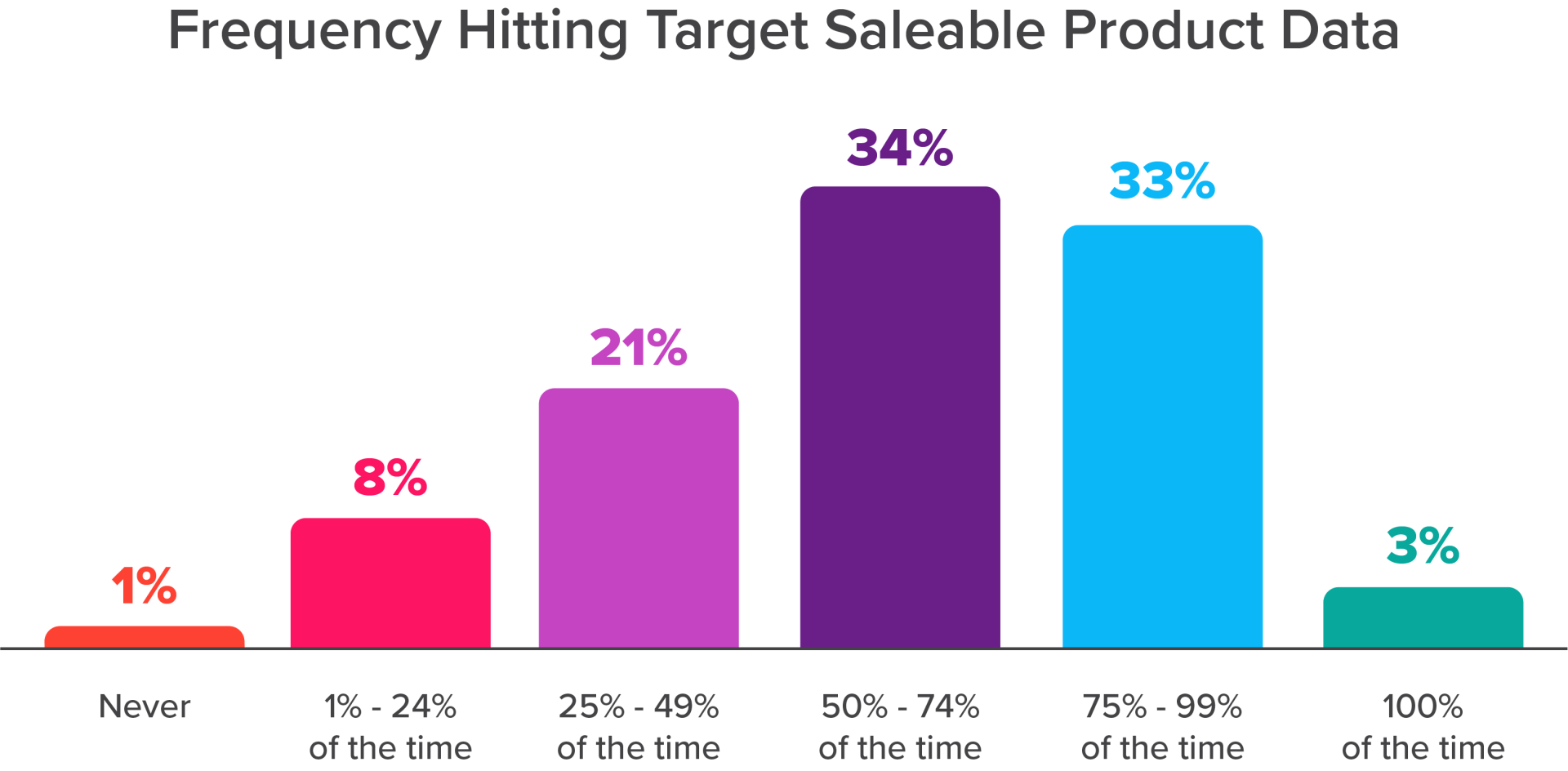
Turnover, a key process behind operational readiness, isn’t necessarily responsible for these missed commercial targets. But the survey helps paint a picture of the high-pressure environment in which turnover plays a role. When it results with hard-to-use information, that pressure compounds, resulting in delays at a point when owners can least afford them.
Commissioning and qualification do not ensure regulatory readiness
Project teams can reach mechanical completion and hit commissioning and qualification milestones and still fall short of commercial readiness. That’s because each of these steps verifies a different part of the system’s status; none, on its own, confirms that the facility is ready to operate. True operational readiness requires alignment between the installed condition, supporting evidence, unresolved risks and owner acceptance.
In FDA-regulated manufacturing, the consequences of confusing milestone completion with true readiness can be significant. Federal enforcement records include facilities with executed qualification documents but incomplete validation programs, commercial production without adequate validation, missing critical process parameters, altered validation reports and backdated signatures. One enforcement case involving unreliable testing and quality records resulted in a $500 million criminal and civil resolution.
These cases did not arise from turnover itself, but they emphasize an upstream lesson: documents alone do not demonstrate readiness. Teams need complete, connected, trustworthy and accessible evidence. Qualification should confirm readiness, not reconstruct it.
A better turnover approach starts during design
When project teams treat turnover as a lifecycle responsibility rather than an end-of-project assignment, they set the project up for a smoother handoff. This approach starts with defining owner acceptance requirements before the work begins, giving the team a clear target for turnover and a shared understanding of what “complete” really means.

Project teams can carry those expectations through design, construction, commissioning and qualification. As the project progresses, the team keeps field conditions, evidence, data, exceptions and acceptance criteria aligned within a single, coherent turnover process.
This early planning changes how teams measure turnover progress. A package that’s “95% complete” may look good on paper, but the remaining 5% could include a critical record required for qualification or owner acceptance. To avoid such a roadblock, the key is to shift focus from “percent complete” to “readiness risks.”
Traditional turnover planning:
How many documents have we collected?
Early, risk-based turnover planning:
Which documents are ready, which are not, and what has to happen next?
For the project team, this early planning provides a common vision. Instead of each discipline working toward its own version of “done,” the delivery team moves forward as one, united by a shared definition of what it takes to complete the turnover package.
There’s no single way to establish this integrated approach to early turnover planning. At CRB, for example, we apply our unique Turnover Readiness and Integration Lifecycle (TRAIL) framework.

This framework helps project teams deliver the information, evidence and context that owners need, regardless of their technology platform. It moves teams toward owner acceptance with greater confidence, resulting in a smoother startup and sustained operations.
Technology supports the process
Technology changes. Readiness standards should not. Digital tools can improve routing, traceability, metadata, review and visibility, but they cannot compensate for undefined requirements, unclear ownership or weak acceptance criteria. In other words, even the most advanced digital tools still depend on a well-defined turnover strategy.
Turnover should deliver operating capability
When the project team leaves, the true value of a robust, well planned turnover approach becomes obvious. Equipment data, maintenance requirements, calibration needs, spare parts, procedures and known exceptions arrive complete and connected. That means operations and reliability teams have the information they need to readily answer practical questions, including:

- What requirement does each record satisfy?
- Which system, asset or package does it support?
- Does it reflect the final installed condition?
- Have teams completed the required reviews?
- Which exceptions remain open?
- What has the owner accepted?
- Where will the controlled record live?
- Can the data support both operations and maintenance?
The benefits of this robust turnover approach go far beyond operations and reliability teams. Maintenance teams gain usable asset data. Quality and validation teams receive controlled evidence. Engineering teams inherit an accurate baseline to guide future decisions.
The result is a stronger foundation for startup, mechanical integrity, troubleshooting, future modifications and regulatory readiness. Instead of functioning as a closeout milestone, turnover becomes the bridge between project delivery and sustained operations.
Build turnover readiness into your next CapEx project
World-class turnover doesn’t require more forms, more meetings, or a larger final package. It’s about knowing what teams will deliver, when owners will receive it, and whether they can trust it.
CRB’s operational readiness team can help you build that clarity into your project from the start. Talk to our team and together, let’s prepare your next CapEx project for owner acceptance success.

